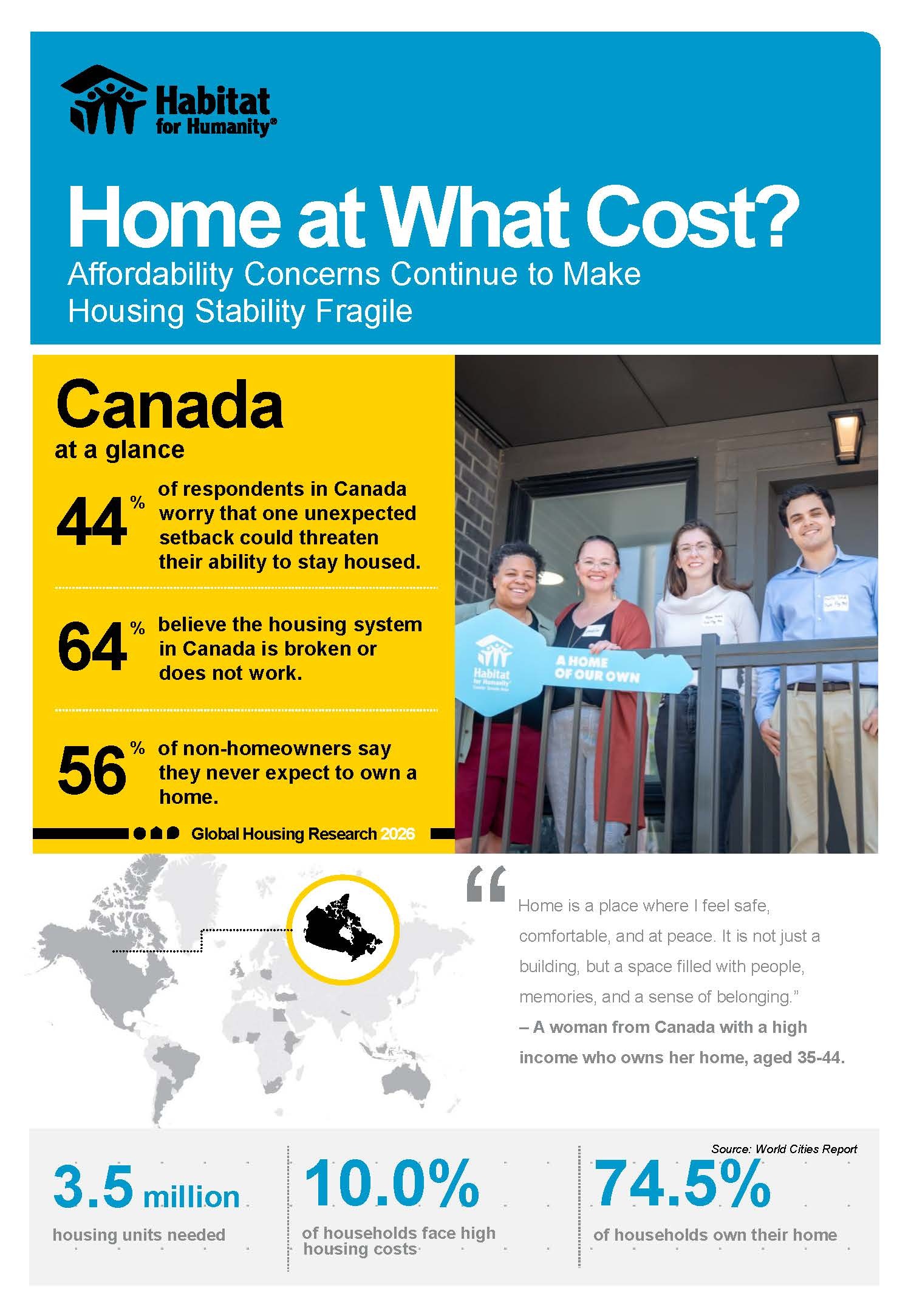
The hidden costs of housing around the world
In a landmark survey of more than 30,000 people around the world, new research by Habitat for Humanity International reveals universal concerns about housing and confidence in housing systems. The study finds that across countries, housing costs are affecting people’s ability to build financial resilience, support their families, maintain their well-being and build a future.
In Canada, the housing crisis has become a crisis of opportunity and well-being
Canada's results reveal a significant gap between housing stability today and confidence in the future. Many Canadians are living with little financial margin for error and are increasingly pessimistic about what lies ahead.
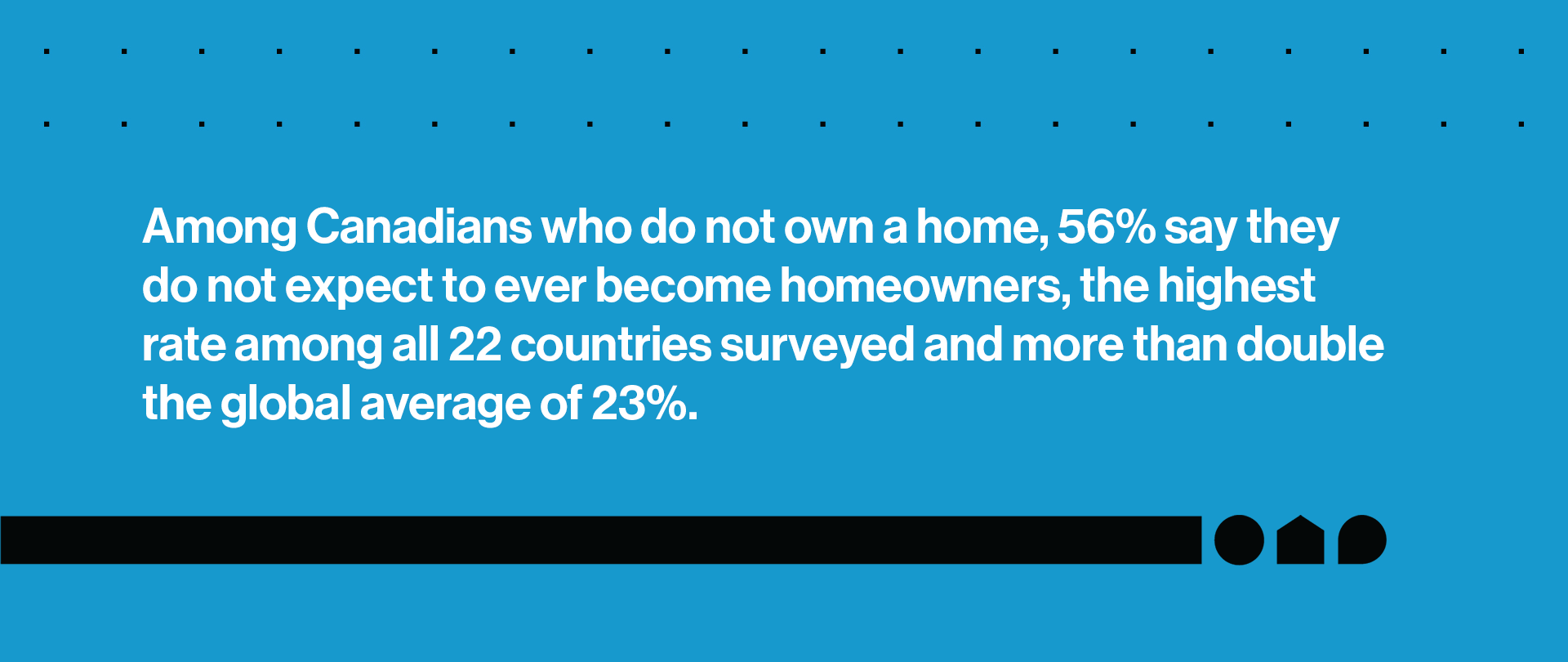
A lack of housing affordability is driving this pessimism. More than half of non-homeowners say homes are too expensive, one in two say their income is too low, and four in ten say they lack enough savings for a down payment. At the same time, 81% of Canadians agree that rising housing costs make it difficult to become a homeowner.
“We have to restore Canadians’ optimism in owning a home — whether that’s a market home or through an affordable program like Habitat’s. For the thousands of families who’ve purchased a home from us, the stability of affordable homeownership is often the difference between putting their life on hold and building the life they want.” - Pedro Barata, Habitat Canada President & CEO
The impact extends well beyond homeownership. Two-thirds of Canadians report making at least one financial sacrifice in the past year to afford housing costs. More than one-third cut back on food and groceries, one-quarter used savings or emergency funds, and 40% reduced spending on social activities. Nearly half of Canadians say that being able to afford housing without constant financial stress is the most important aspect of better housing.
Housing is putting futures on hold
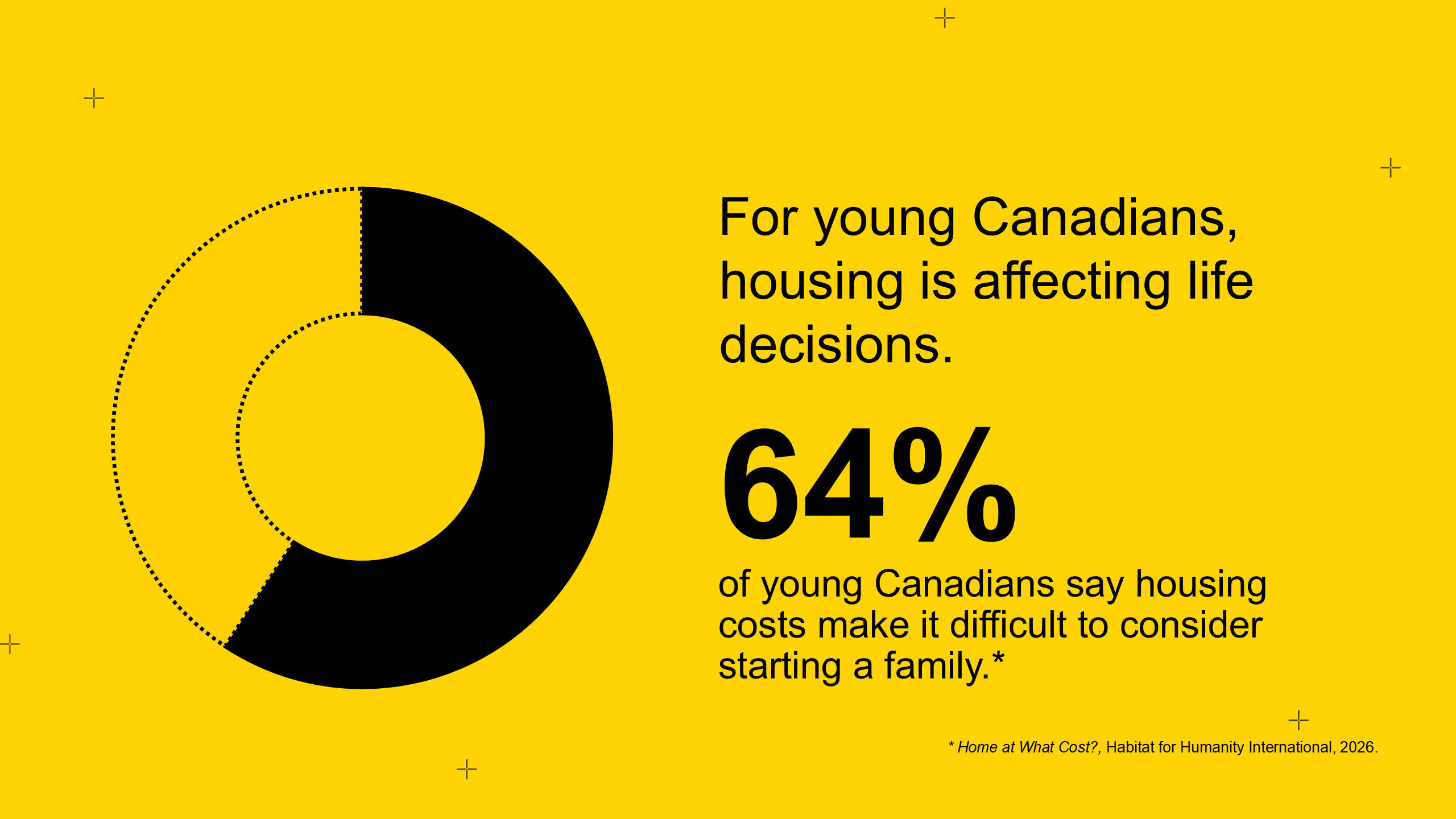
For younger generations, housing pressure is no longer simply delaying homeownership; it is reshaping the timeline of adulthood itself. Research suggests housing costs are increasingly influencing when people feel able to start families, pursue personal ambitions, achieve financial independence, and build long-term security. As these milestones become harder to reach, housing is becoming the factor that determines whether major life decisions feel possible.
Nearly half of Canadians say housing costs make it difficult to consider starting a family, rising to almost two-thirds among younger adults. Younger Canadians are also more likely to identify housing as one of the biggest sources of stress in their lives.
People are living with little margin for error
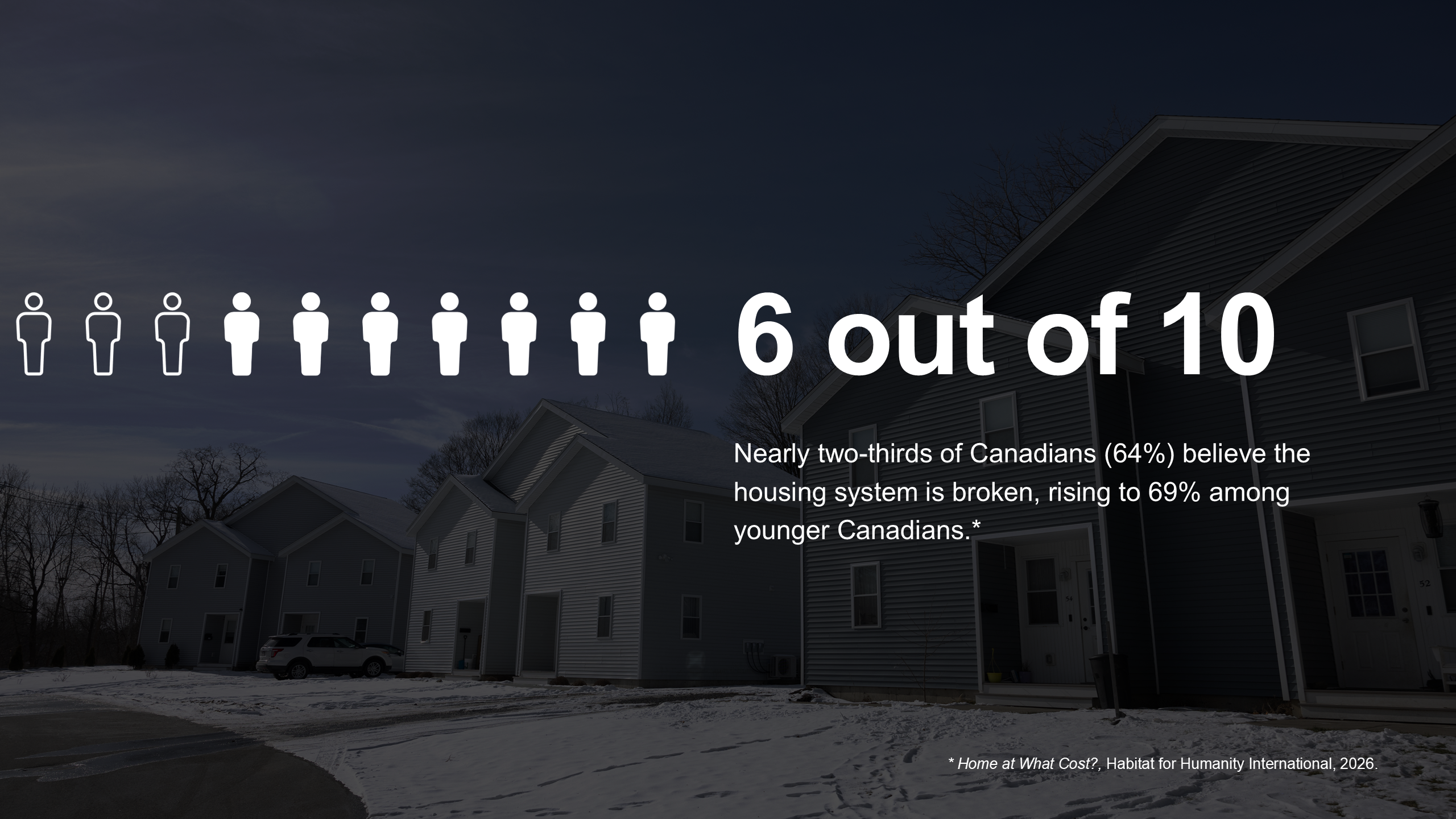
Perhaps most concerning, many households feel vulnerable despite having stable housing today. While 91% feel secure in their right to remain where they live, 44% worry that a single unexpected setback, such as a job loss, illness or major expense could threaten their ability to stay housed. Meanwhile, 64% believe Canada's housing system is broken and only 29% believe current housing policies are effective.
“Canada’s housing crisis has become an opportunity crisis. When people are sacrificing food, savings, and peace of mind to afford housing, they can never get ahead. They can’t build the futures they want for themselves and their children.” - Pedro Barata, President & CEO, Habitat for Humanity Canada
The climate crisis is impacting housing safety and exposing the impacts of inequality
Increasingly, people are seeing the threats of climate change on their homes. They expect the risks to worsen, and they are being forced in some cases to delay housing improvements that would build greater resilience because housing costs are already too high.
One-quarter (26%) of Canadians agree that extreme weather will make living where they are harder in the future. A significant share of Canadians are thinking not only about whether housing is affordable, but whether it will remain resilient in the face of growing climate-related risks.
Through partnerships, advocacy and housing solutions, Habitat for Humanity works alongside families and communities to expand access to housing that creates stability and opportunity.
About the research
Home at What Cost is Habitat for Humanity International's latest global housing research, exploring how people experience housing in their daily lives. Based on survey responses from more than 30,000 people across 22 countries, including 1,400 Canadians, the research goes beyond traditional housing metrics to understand how housing affects people's sense of safety, stability, affordability, dignity and opportunity. The research was designed to complement existing housing data by focusing on the lived experience of housing. It examines whether people feel secure in their homes, the sacrifices they make to stay housed, how housing influences major life decisions, and whether they believe the housing system is working for them.